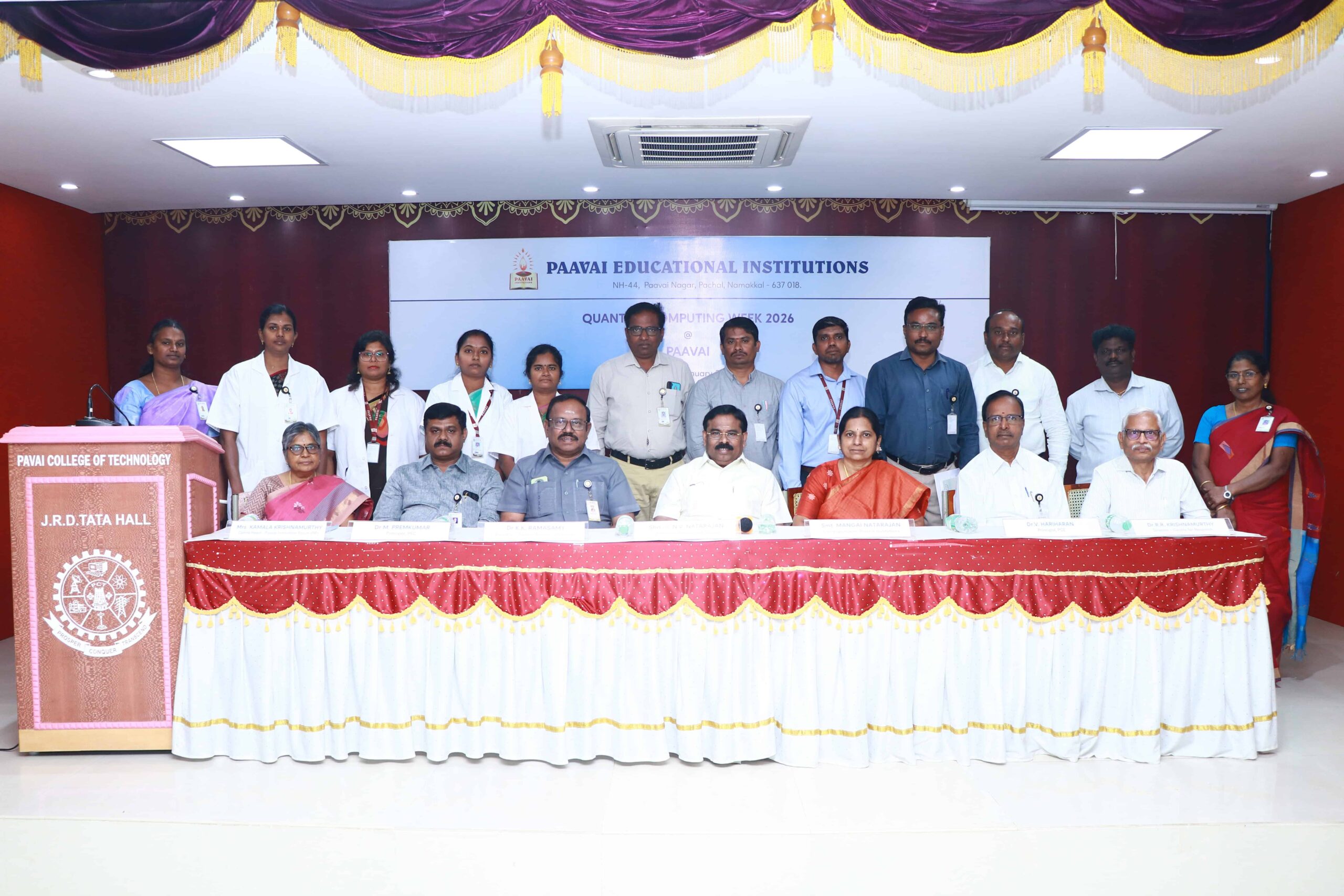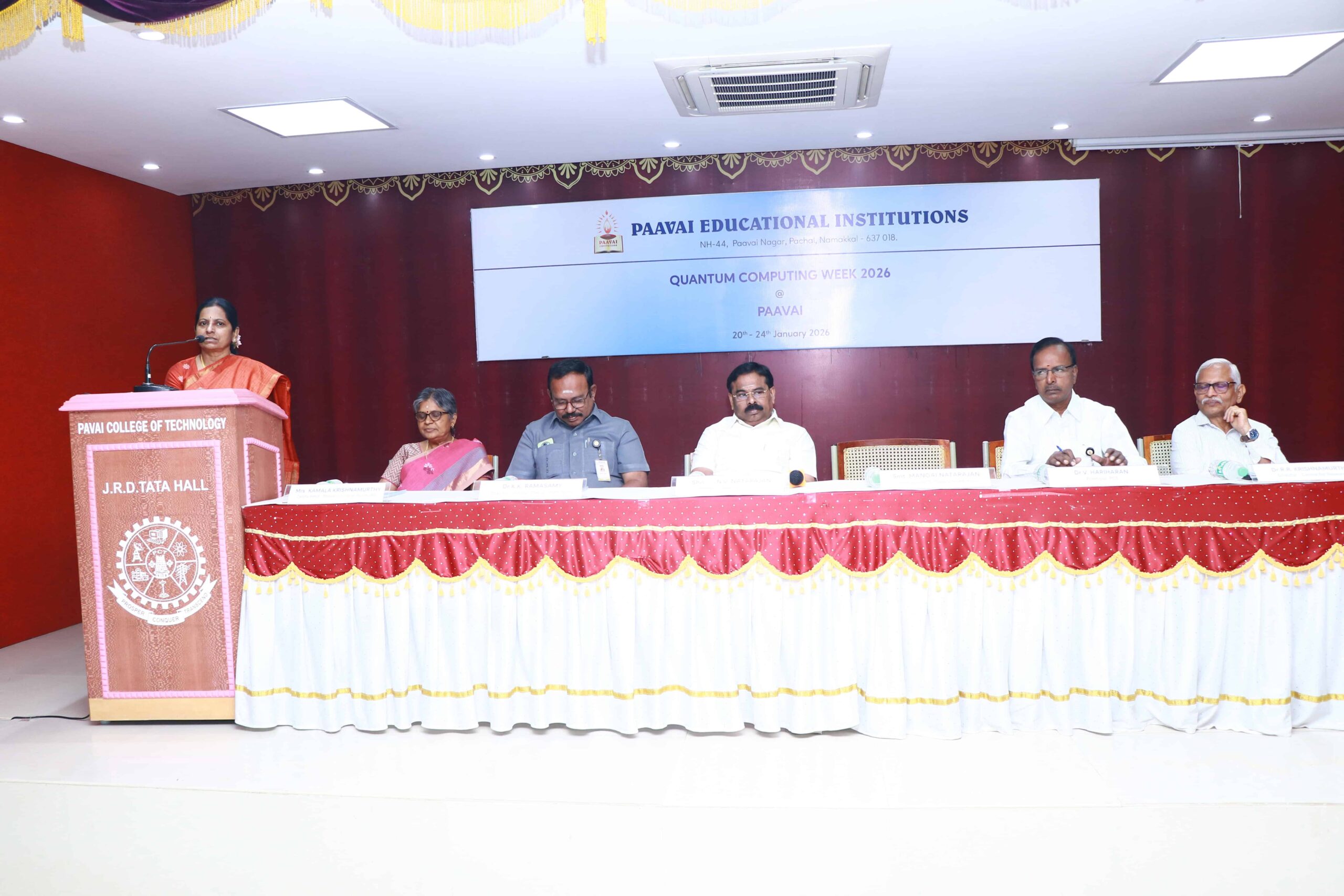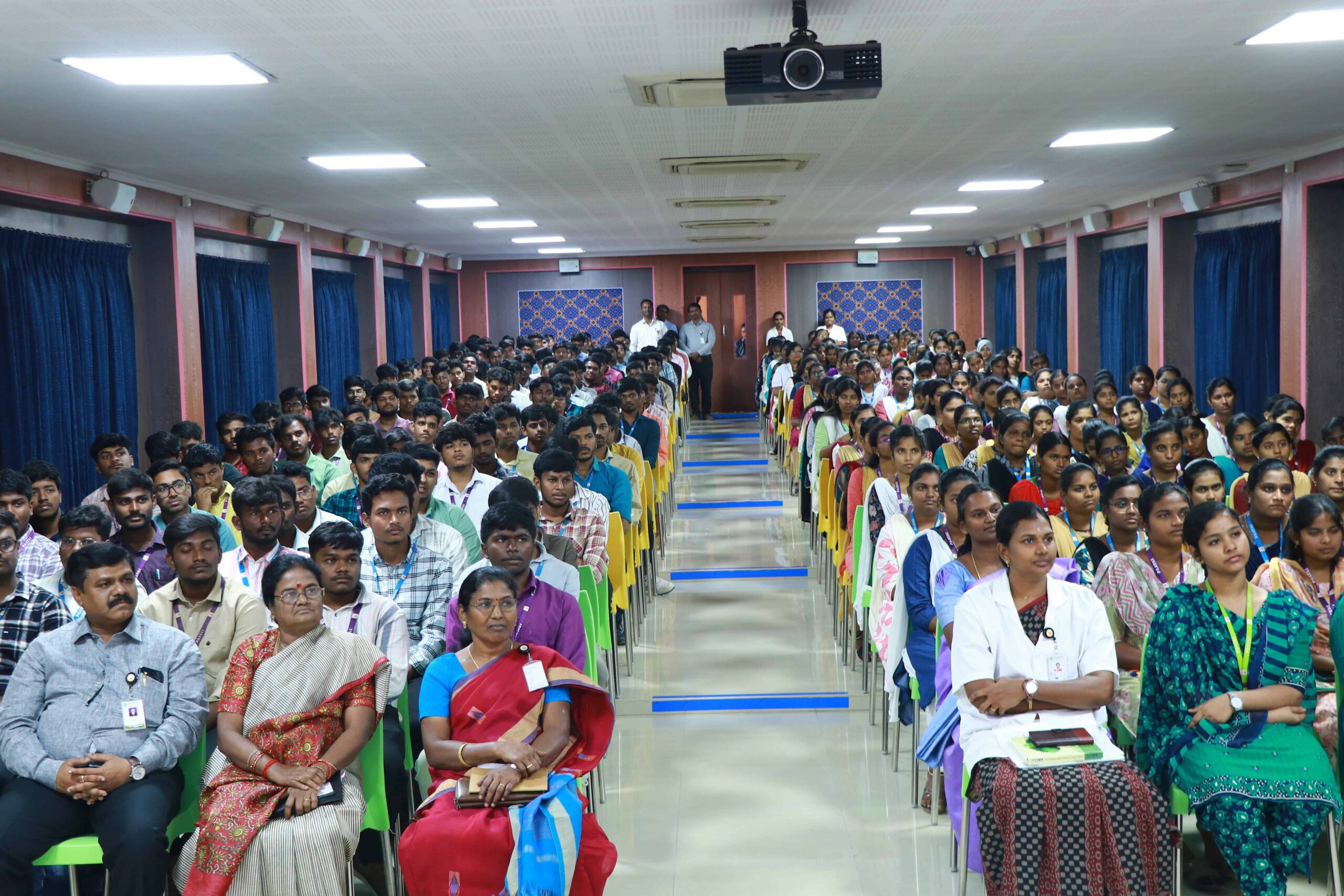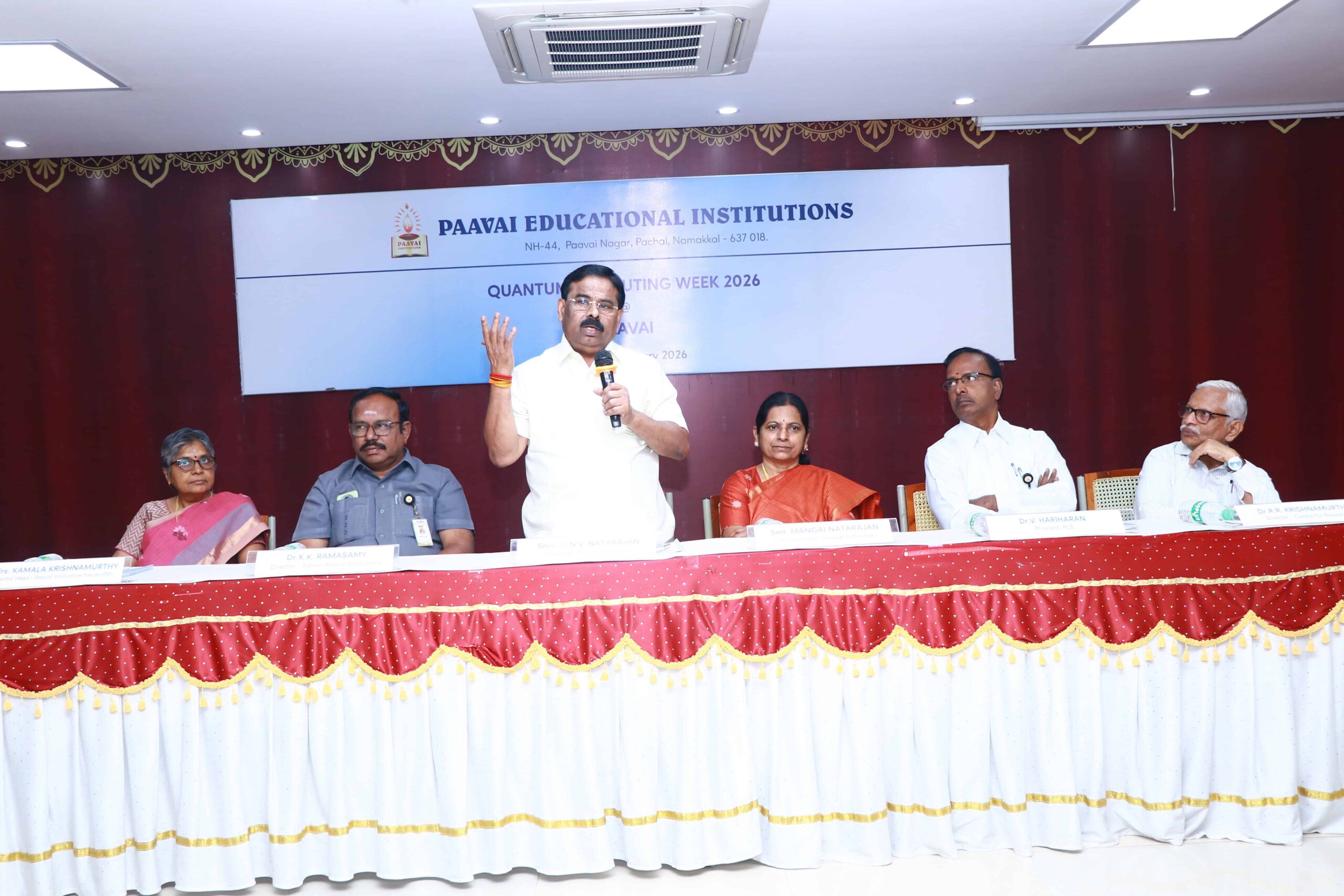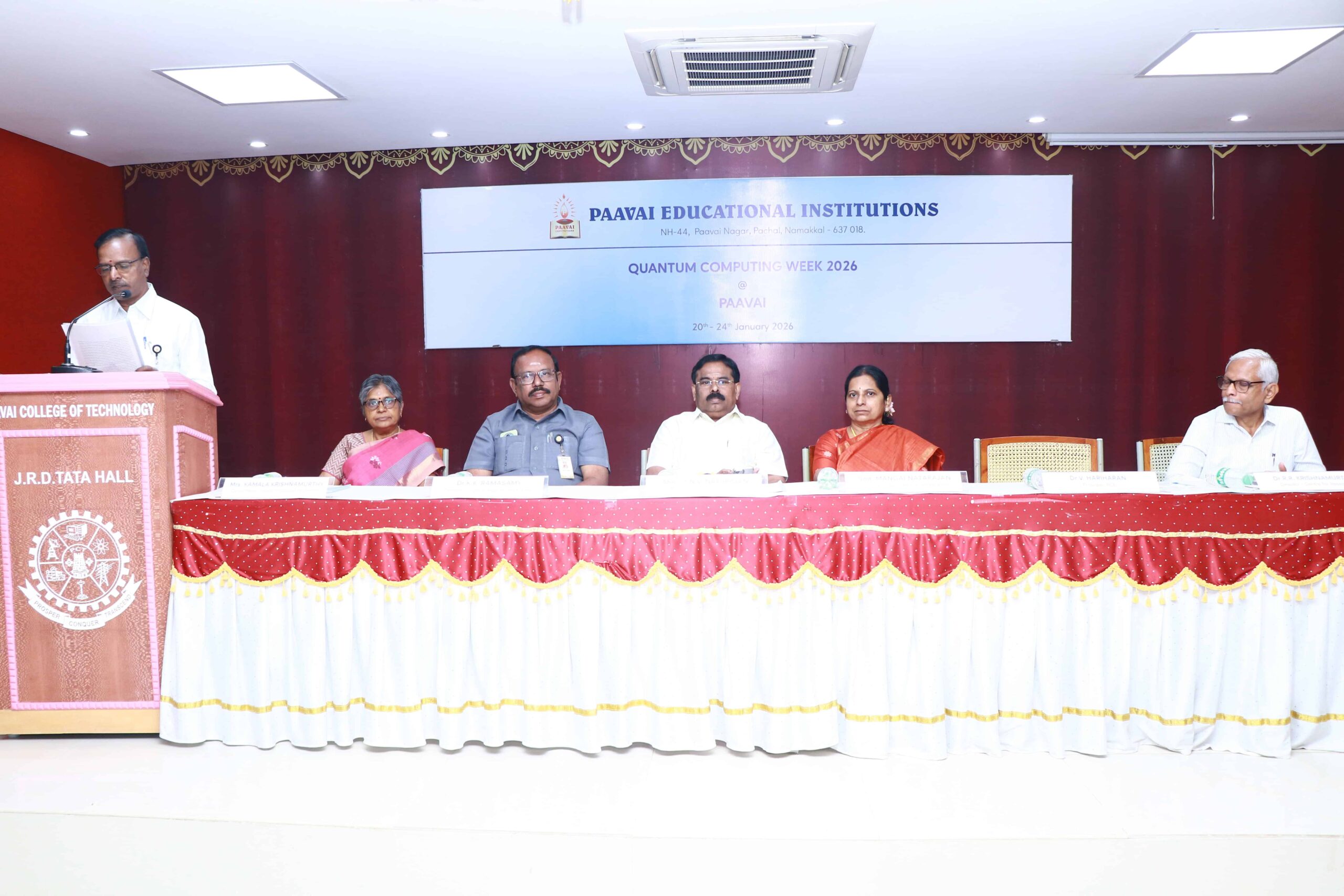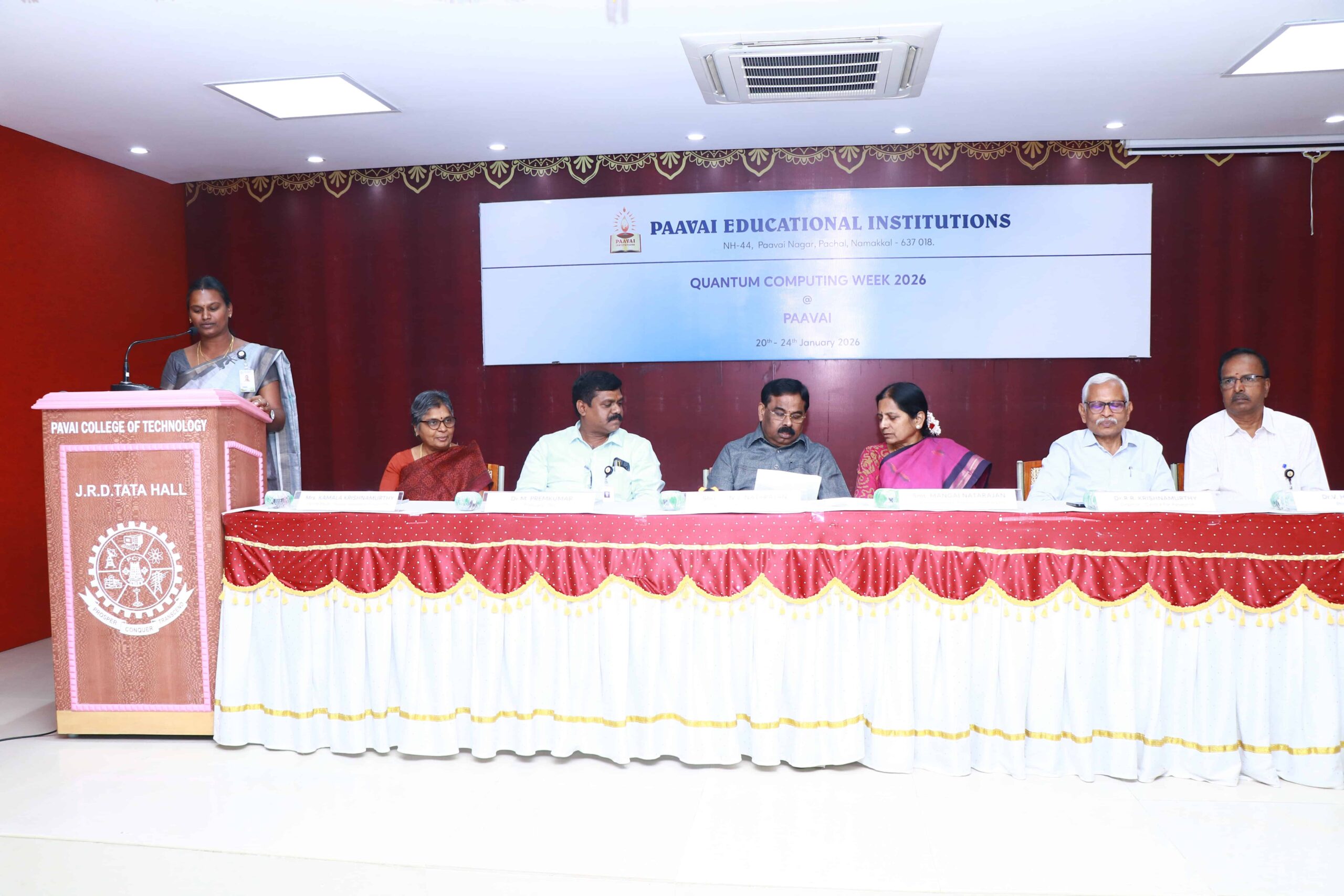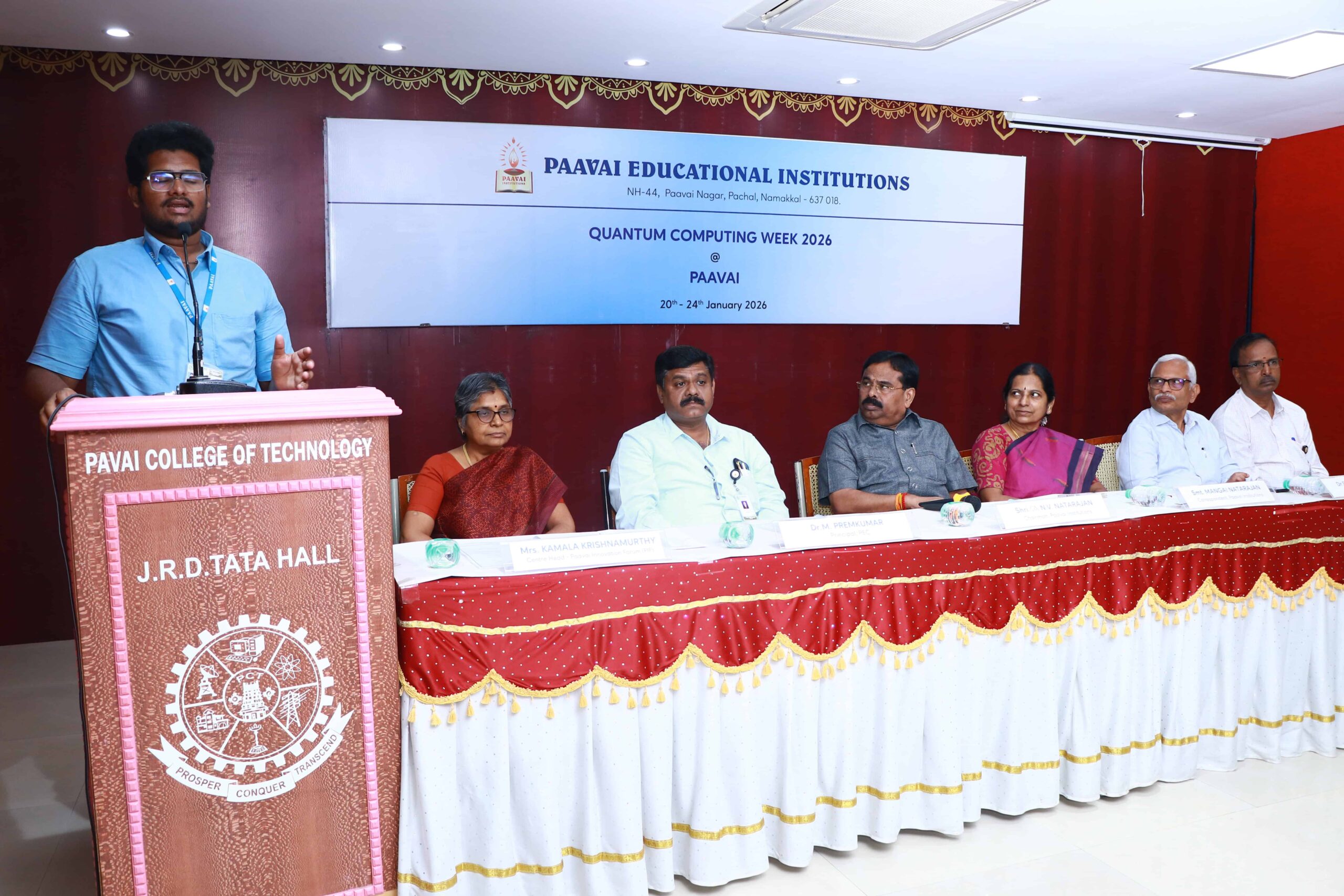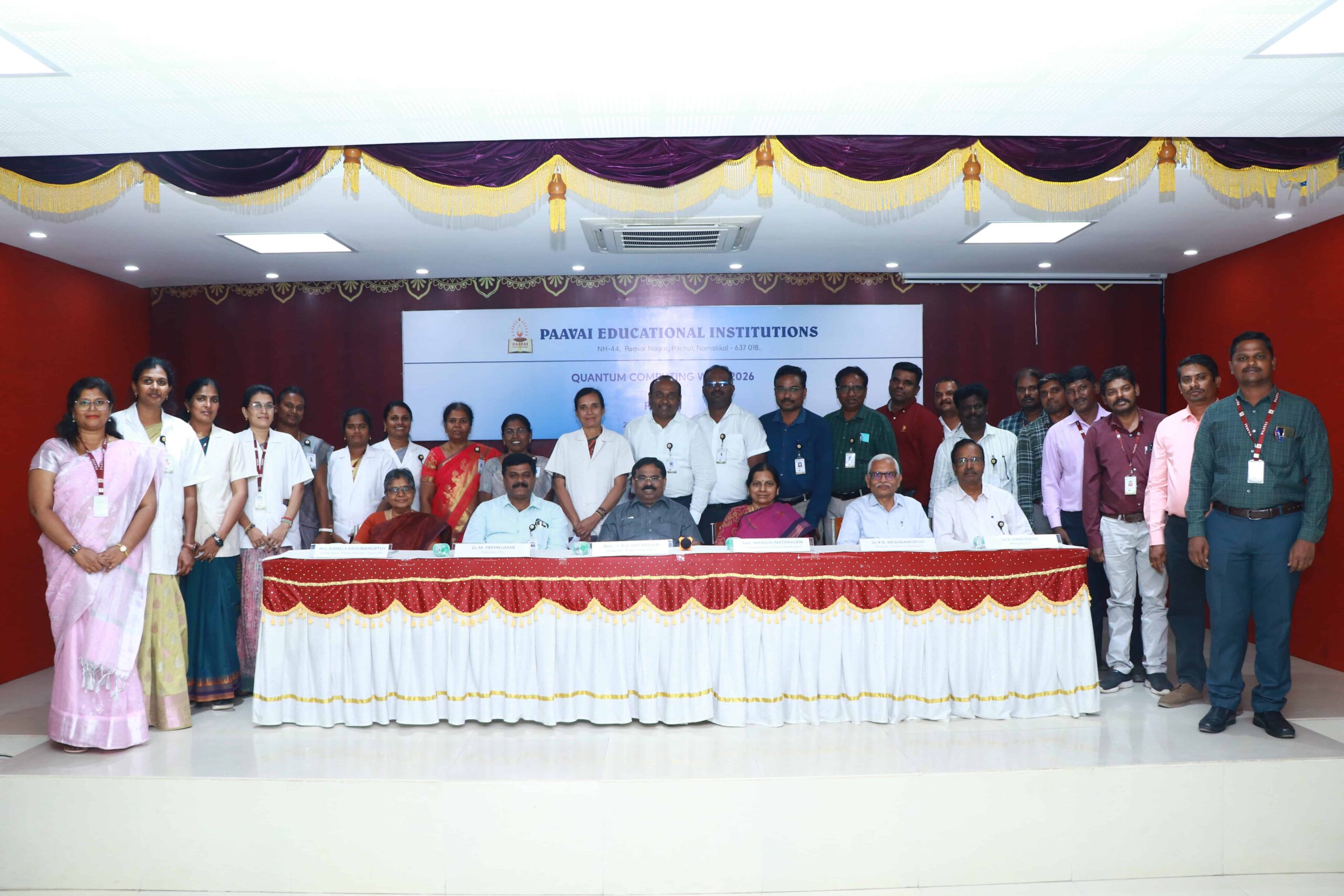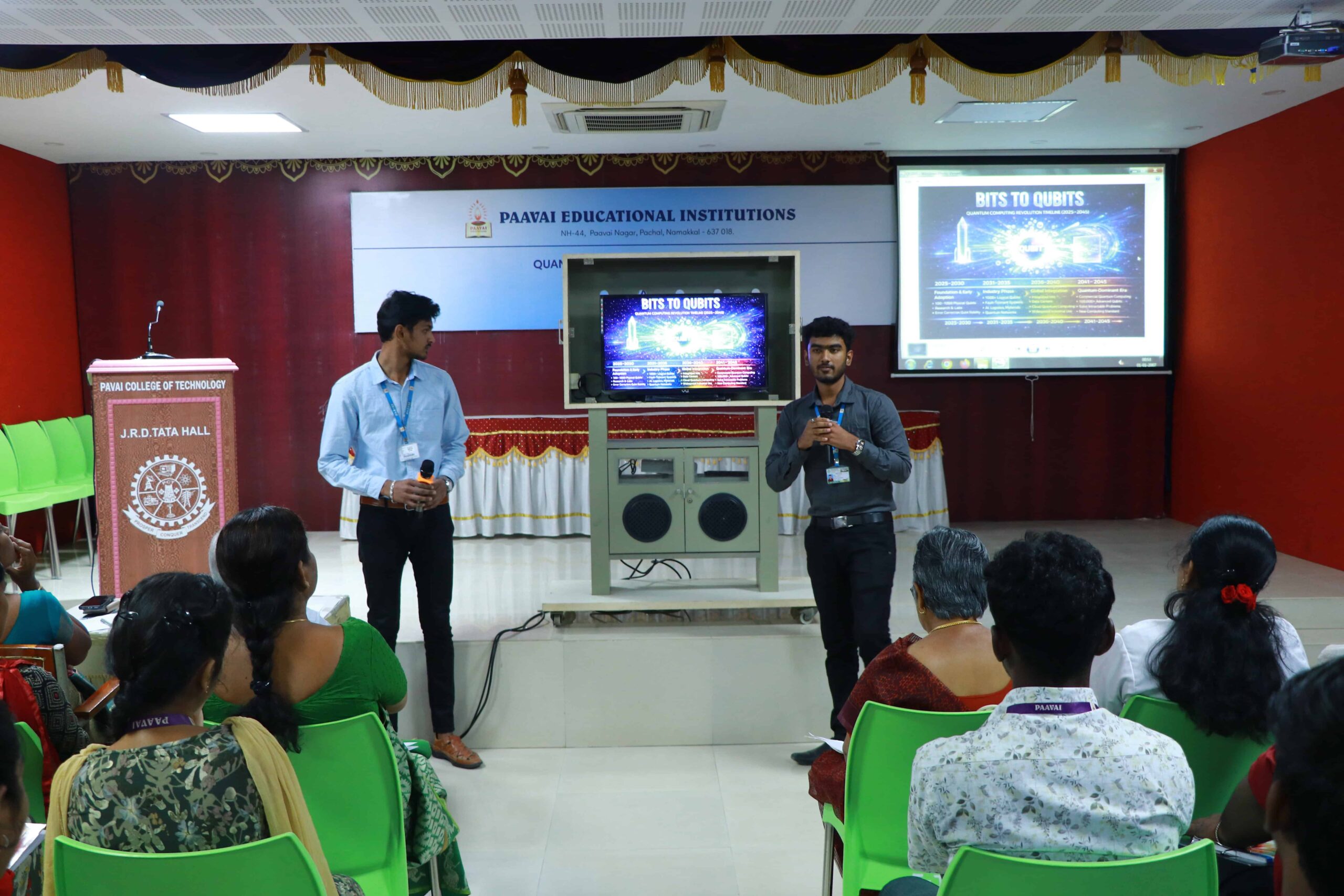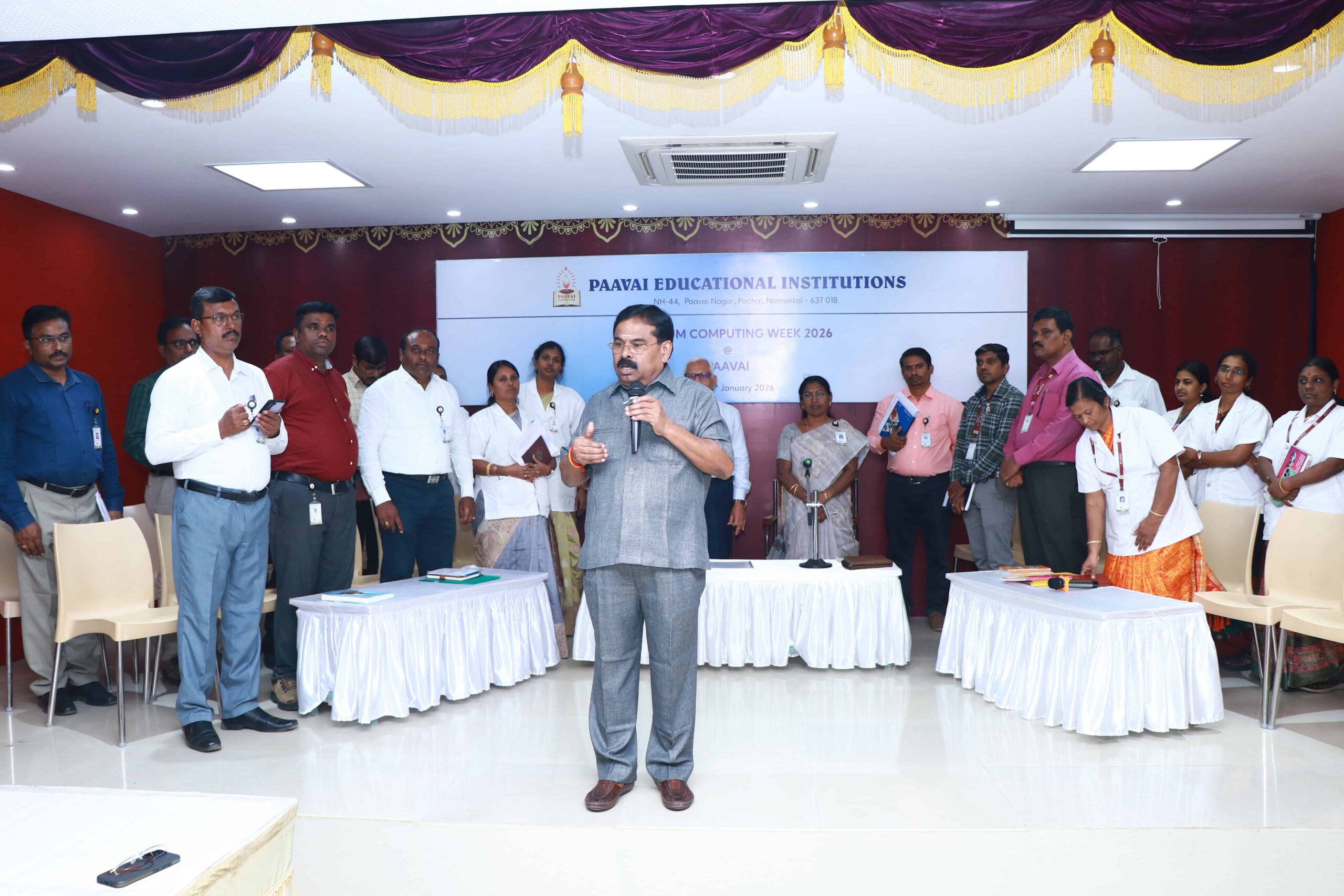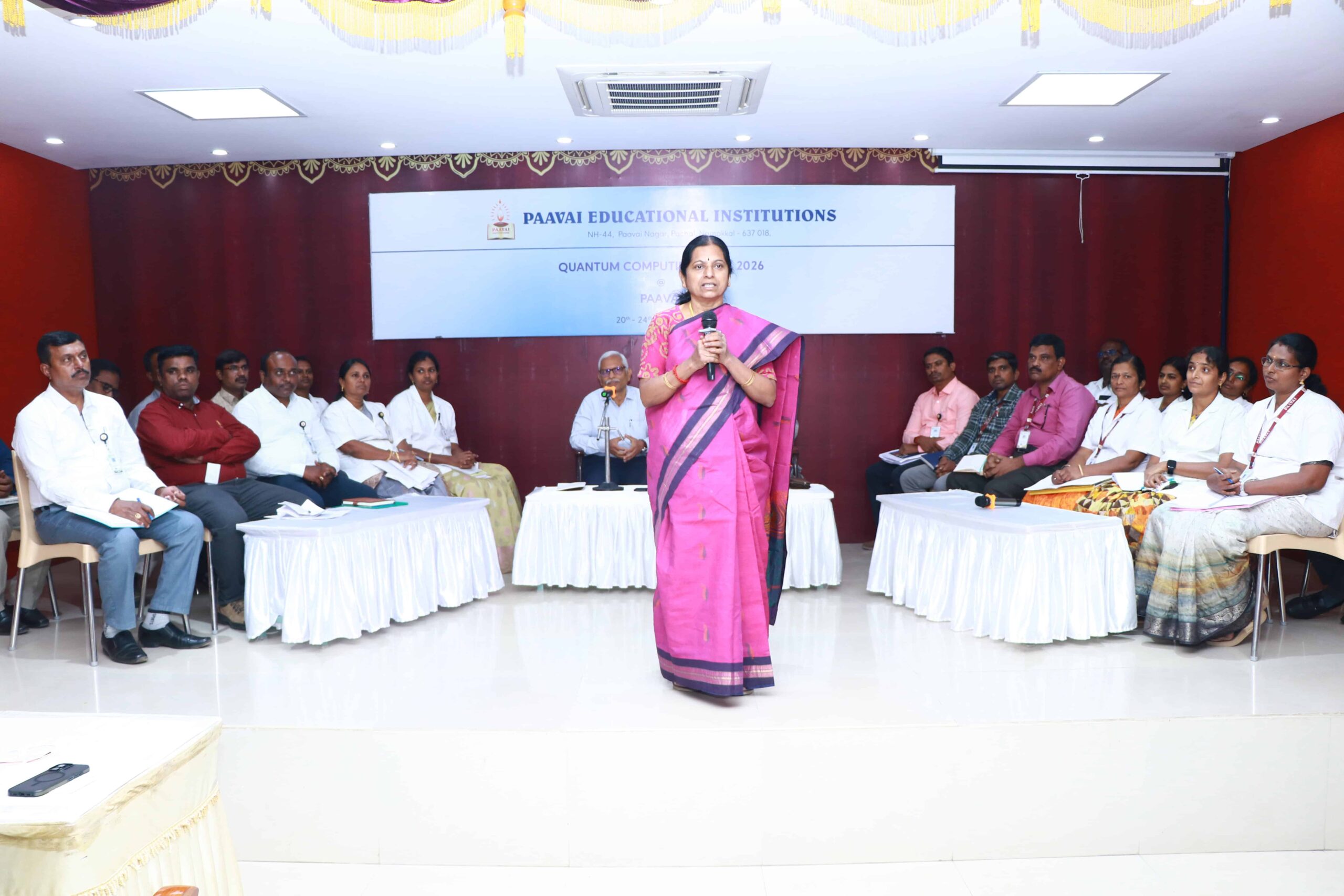
Paavai Institutions organized Quantum Computing Week 2026 from 20th to 24th January 2026 at TATA Hall, with the objective of creating awareness and developing an in-depth understanding of emerging quantum technologies among students and faculty members. The five-day academic programme brought together participants from multiple disciplines to explore recent developments in quantum computing and its growing impact on science, industry, and society.
The programme commenced with a prayer and Tamilthai Vazhthu rendered by the students, setting a solemn and inspirational tone. This was followed by the Welcome Address delivered by Mrs. M. Janani, Assistant Professor (IT), Paavai Engineering College. An overview of Quantum Computing Week was presented by Dr. R. Mohanapriya, Associate Professor and Head, Department of Electronics and Communication Engineering. The Presidential Address was delivered by Shri. C. A. N. V. Natarajan, Founder and Chairman, Paavai Institutions, who emphasized the importance of interdisciplinary knowledge, research-oriented learning, and the transformative potential of quantum technologies in shaping future innovations.
Day 1
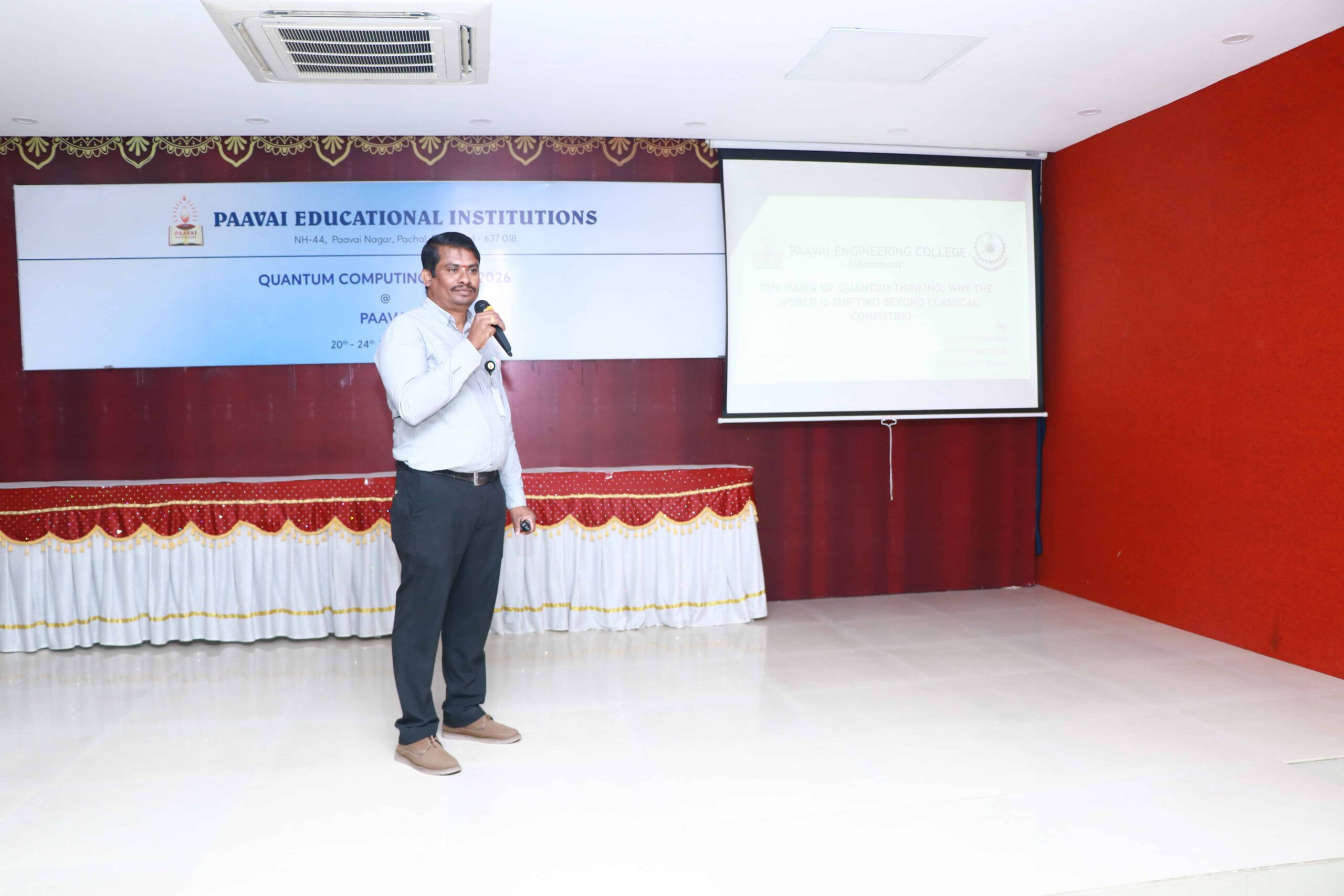
The technical sessions began with The Dawn of Quantum Thinking: Why the World Is Shifting Beyond Classical Computing by Dr. T. Krishnakumar, Professor and Head, Department of Physics, who explained the limitations of classical computing and how quantum principles enable faster and more efficient problem-solving. This was followed by Seeing the Unseen: Superposition, Entanglement, and Interference Simplified by Dr. T. Prakash, Associate Professor, Department of Physics, where students gained conceptual clarity through simplified explanations and illustrative examples.
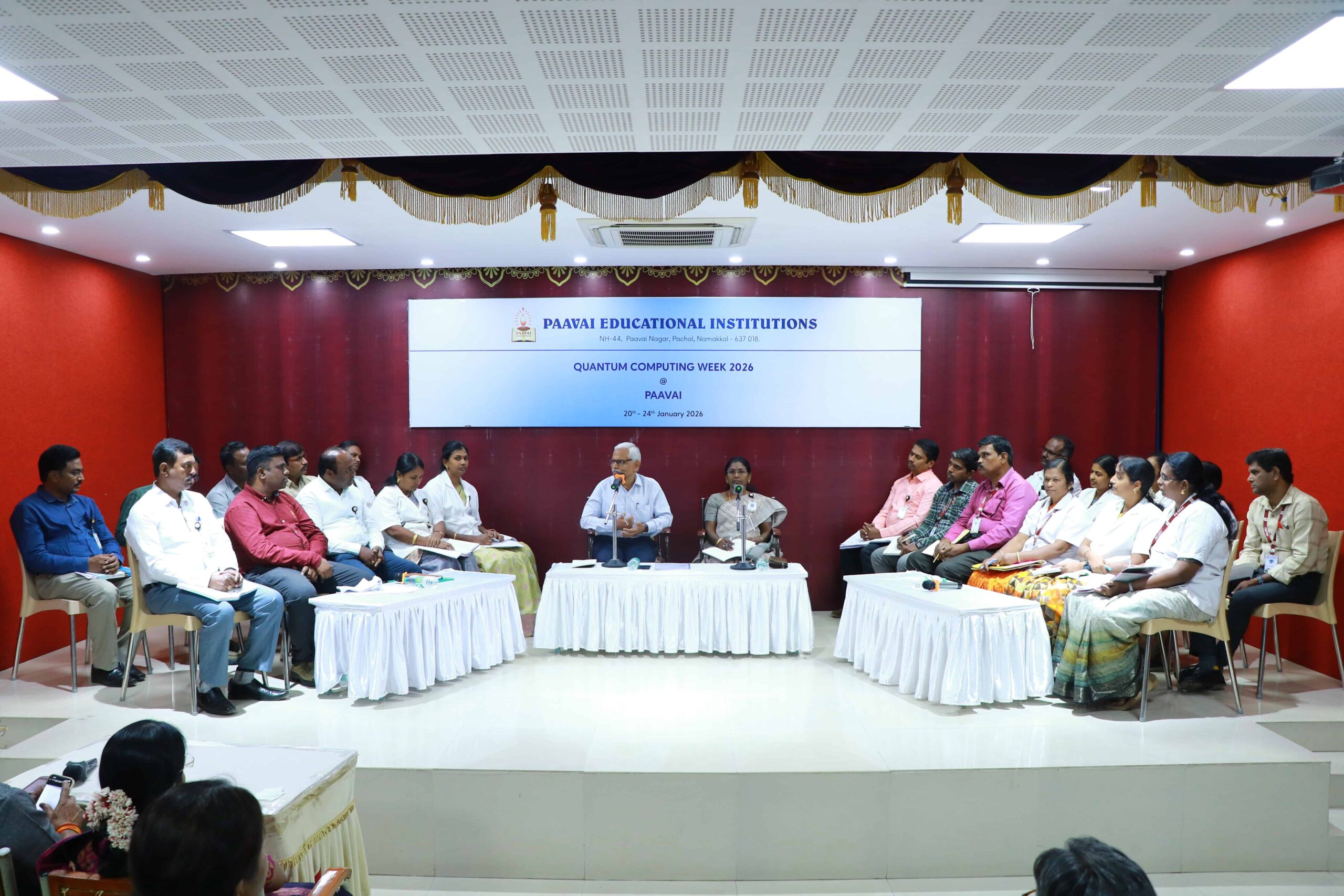
The session From Vacuum Tubes to Qubits: The Evolution of Computing delivered by Dr. R. Mohanapriya traced the historical evolution of computing technologies and highlighted the significance of qubits in modern computation. The day concluded with Let’s Talk Quantum: Open Discussion on Curiosity and Concepts, moderated by Mrs. Kamala Krishnamurthy, Centre Head, Paavai Innovation Forum, with panellists Dr. D. Banumathy, Dr. R. Mohanapriya, Mrs. C. Barathi, and Dr. N. Nathiya. The interactive discussion encouraged students to freely ask questions and strengthened their foundational understanding of quantum concepts.
Day 2
The session Beyond AND & OR: Quantum Logic Gates That Defy Intuition was presented by Mr. S. Vijay Murugan, Assistant Professor (ECE), introducing participants to the differences between classical and quantum logic gates and their role in quantum circuits. This was followed by Hands-on with Quirk: Building Your First Quantum Circuit, conducted by Mrs. Kamala Krishnamurthy and Mr. M. Sathya Sundaram, Associate Professor (AI & DS), which enabled students to design simple quantum circuits using simulation tools.
Inside a Qubit: How Quantum States Store and Represent Information by Dr. D. Banumathy explained quantum state representation using visualization techniques. The day concluded with India’s Quantum Roadmap: Opportunities Ahead for Young Innovators by Dr. P. Srinivasan and Dr. N. Hariprakash, highlighting national initiatives and motivating students to explore careers in quantum research.
Day 3
Grover’s Search: Finding a Needle in a Quantum Haystack was delivered by Dr. S. Sasikala, Associate Professor (CSE), explaining the algorithm’s speed advantage through illustrative examples. This was followed by Breaking Codes and Barriers: Shor’s Algorithm and Cryptography by Dr. V. Priya, Associate Professor (CSE), which demonstrated the impact of quantum algorithms on cryptography and data security.
The afternoon session Experimenting in the Cloud: Getting Started with IBM Quantum Experience was conducted by Dr. M. Rameshkumar, Professor and Head (IoT), allowing participants to execute basic quantum programs on cloud-based platforms. The day concluded with Design Your Own Quantum Circuit: A Guided Team Activity, led by Mrs. Kamala Krishnamurthy and Ms. K. Thendral, Assistant Professor (ECE), promoting collaborative learning and problem-solving skills.
Day 4
Quantum Computing Applications in Nature by Dr. V. Hariharan, Principal, connected quantum principles with natural phenomena and interdisciplinary applications. This was followed by Securing the Future: Quantum Communication and Cyber Security by Mr. R. Rakesh, Assistant Professor (IT), highlighting emerging security challenges.
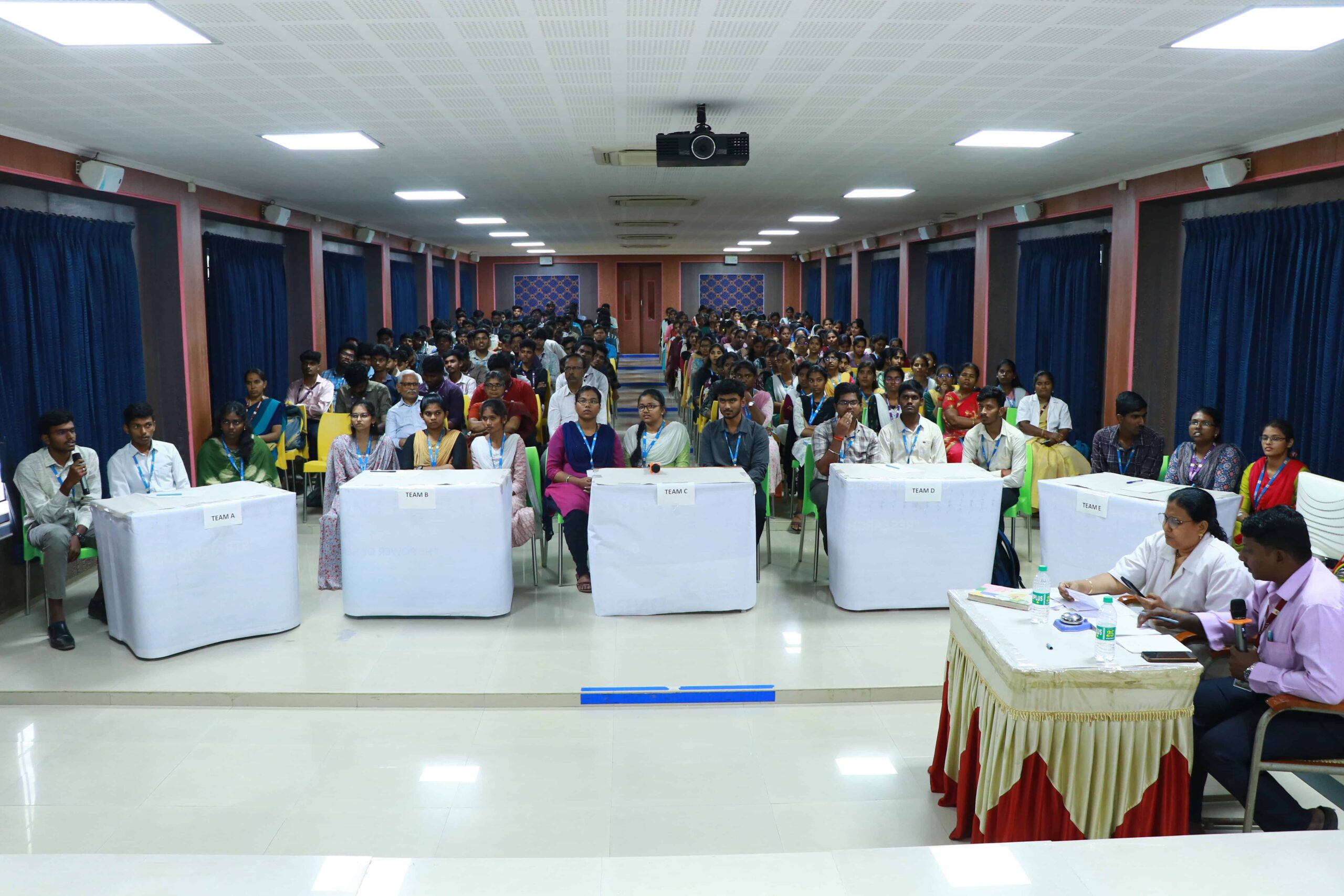
A debate titled Will Quantum Replace Classical?, moderated by Dr. A. Immanuvel with panellists Dr. Muthusamy, Dr. M. Rameshkumar, Dr. V. Priya, and Mrs. P. Divya, enhanced critical thinking by comparing classical and quantum computing paradigms. The day concluded with Quantum in Everyday Life – From Nature to Nanotechnology by Dr. P. Sathya, using real-world examples to contextualize quantum concepts.
Day 5
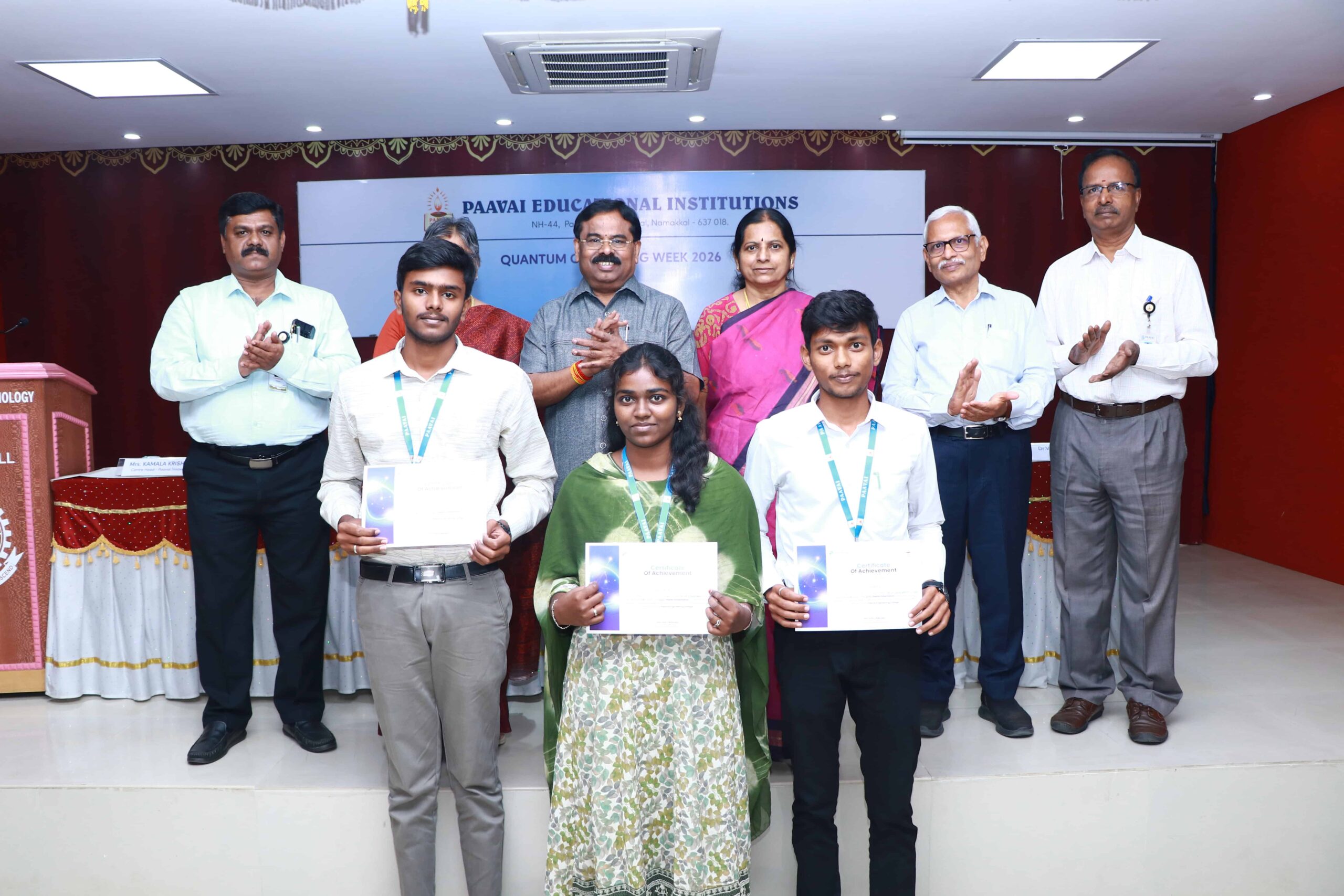
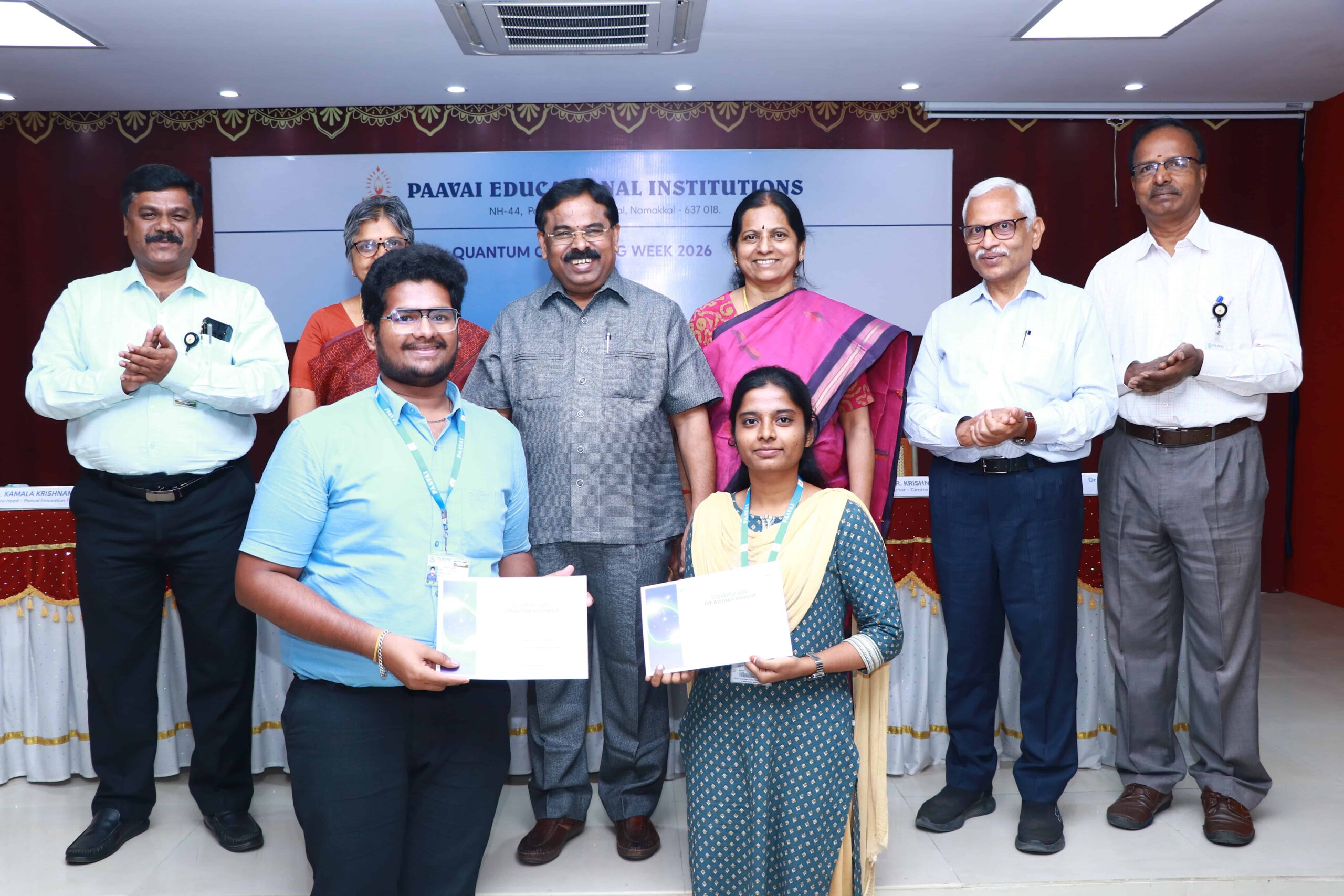
Quantum Concepts in Color: Poster and Model Exhibition, coordinated by Dr. B. Venkatesan and Dr. A. Vanitha, showcased innovative student models. The posters were evaluated by Prof. Dr. R. R. Krishnamurthy and Dr. Revathi. G. Somaprakaasam and Vinuswetha (III Year IT) won the First Prize, while Vishnu Prasath S. S. and Tharun S. (III Year IT) secured the Second Prize.
Valedictory Session and Way Forward
Felicitations were offered by Smt. Mangai Natarajan, Correspondent, Paavai Institutions. The Valedictory Ceremony featured a Welcome Address by Dr. N. Nathiya, Assistant Professor and Head (AIML). The Way Forward session, presented by Ms. K. Thendral, Assistant Professor (ECE), emphasized continuous learning, curriculum integration, and advanced hands-on exposure.
During The Way Forward session, Ms. K. Thendral, Assistant Professor, ECE, highlighted the importance of continuous learning and skill development for future career growth. Quantum Computing Week laid a strong foundation by enabling students to gradually transition from awareness to application in an otherwise complex and abstract domain. The programme effectively addressed the initial apprehension surrounding quantum computing by clearly explaining why classical computing is approaching its limitations and how quantum principles such as superposition and entanglement fundamentally redefine computational thinking. This approach helped students develop curiosity and confidence, creating a positive learning mindset toward advanced technologies.
A deliberate emphasis on conceptual clarity ensured that students first understood how information is represented and processed using qubits, and how quantum logic gates relate to and differ from classical logic systems. Faculty-led explanations, discussions, and demonstrations ensured that comprehension preceded execution, allowing students to build a strong theoretical base before engaging with tools and platforms.
The transition to experiential learning through quantum simulators and cloud-based platforms enabled students to design, analyze, and test quantum circuits independently. This hands-on exposure transformed abstract theory into tangible understanding, significantly improving analytical ability, confidence, and problem-solving skills. By engaging directly with emerging quantum tools, students gained practical insight into current industry and research practices.
Further, exposure to application-oriented sessions demonstrated how quantum computing extends beyond theory into domains such as secure communication, cryptography, nature-inspired systems, and advanced sensing technologies. These sessions helped students recognize quantum computing as a future-ready and interdisciplinary technology with relevance across engineering, science, and data-driven domains.
The reflective activities, including discussions, debates, exhibitions, and challenges, provided students with opportunities to articulate their understanding, apply concepts creatively, and engage in critical thinking. These activities reinforced learning outcomes while nurturing collaboration and communication skills.
Going forward, sustained impact can be achieved by deepening hands-on engagement through advanced workshops, mini-projects, and research-oriented activities; systematically integrating quantum computing concepts into undergraduate and postgraduate curricula; establishing dedicated laboratory and simulation facilities; and encouraging faculty and students to pursue certifications, research, and interdisciplinary projects. Such continued efforts will ensure that learners are not only aware of quantum computing but are also prepared to contribute meaningfully to research, innovation, and industry adoption in this emerging field.